Let's be honest. Programmatic advertising sounds intimidating.
Real-time bidding. Demand-side platforms. Supply-path optimization. It's enough to make any marketing leader want to crawl back to the comfort of a simple billboard buy.
But here's the thing, programmatic isn't complicated because it has to be. It's complicated because the industry made it that way. Gatekeeping wrapped in jargon. Complexity as a feature, not a bug.
We're not into that.
At Skymattix, we believe in letting the people in. That means demystifying the tools that help progressive brands grow. That means giving you the playbook, not hiding it behind a six-figure retainer.
So let's break down programmatic advertising for 2026. No fluff. No corporate doublespeak. Just the stuff that actually works.
What Even Is Programmatic Advertising?
Strip away the buzzwords and programmatic advertising is beautifully simple: it's automated ad buying.
Instead of calling up a publisher, negotiating rates, and manually placing your ads, algorithms do the heavy lifting. They evaluate millions of ad opportunities in milliseconds. They bid on the ones that match your targeting criteria. They place your message in front of the right people at the right time.
The magic happens through Real-Time Bidding (RTB), an automated auction where advertisers compete for individual impressions. Your ad shows up on someone's screen because an algorithm determined that person matched your ideal customer profile and your bid won.
Think of it like a stock exchange for attention. Fast. Efficient. Data-driven.

The result? You can reach more of the right people without manually managing every placement. That's the promise of programmatic.
But, and this is a big but, the promise only delivers when you know how to use it.
The 2026 Shift: From Volume to Precision
Here's what's changed. The old playbook was simple: maximize reach, blast your message everywhere, hope something sticks.
That playbook is dead.
2026 programmatic is about precision over volume. Quality over quantity. Intentional scaling instead of spray-and-pray tactics.
Why the shift? A few reasons:
Privacy got real. Third-party cookies are gone. Privacy regulations keep tightening. The data you used to rely on for targeting? It's evaporating. First-party data, the information you collect directly from your audience, is now your most valuable asset.
AI changed the game. Algorithms are smarter. They can handle routine monitoring and optimization. But they need human strategy to guide them. The brands winning in 2026 are the ones that pair AI efficiency with human creativity.
Measurement evolved. Last-click attribution is a relic. Modern programmatic success requires understanding how impressions influence outcomes across channels, even when they don't generate immediate clicks.
The stakes got higher. US programmatic ad spending will exceed $200 billion in 2026. With that much money flowing through the system, the difference between strategic and sloppy is the difference between growth and waste.
The stress of scaling doesn't come from programmatic itself. It comes from doing it without intention.
The Stress-Free Playbook: 5 Ways to Scale Smart
Ready to grow without the chaos? Here's how we approach it with our clients.
1. Build Your First-Party Data Foundation
This is non-negotiable. If you're still relying on third-party data, you're building on quicksand.
First-party data comes from your website visits, email engagement, CRM records, and direct customer interactions. It's yours. It's compliant. And it's incredibly powerful.
The move? Invest in a Customer Data Platform (CDP) that centralizes your owned data into unified audience profiles. This gives you the targeting precision that third-party cookies used to provide, without the privacy headaches.
Action step: Audit your current data capture. Where are the gaps? What interactions aren't you tracking? Fix those first.
2. Go Account-Based, Not Spray-Based
Stop targeting "everyone who might be interested." Start targeting the accounts that actually matter.
Account-Based Advertising (ABA) lets you upload your target account lists and match them against ad inventory. Every impression goes to companies with genuine buying potential. No more wasted spend on audiences that will never convert.
This is especially powerful for B2B brands and progressive organizations with specific audiences. Why pay to reach everyone when you can pay to reach the right ones?
Action step: Build tiered account lists based on ICP fit, intent signals, and revenue potential. Then build your campaigns around those tiers.
3. Match Your Message to the Moment
Not every prospect is ready to buy. So stop treating them like they are.
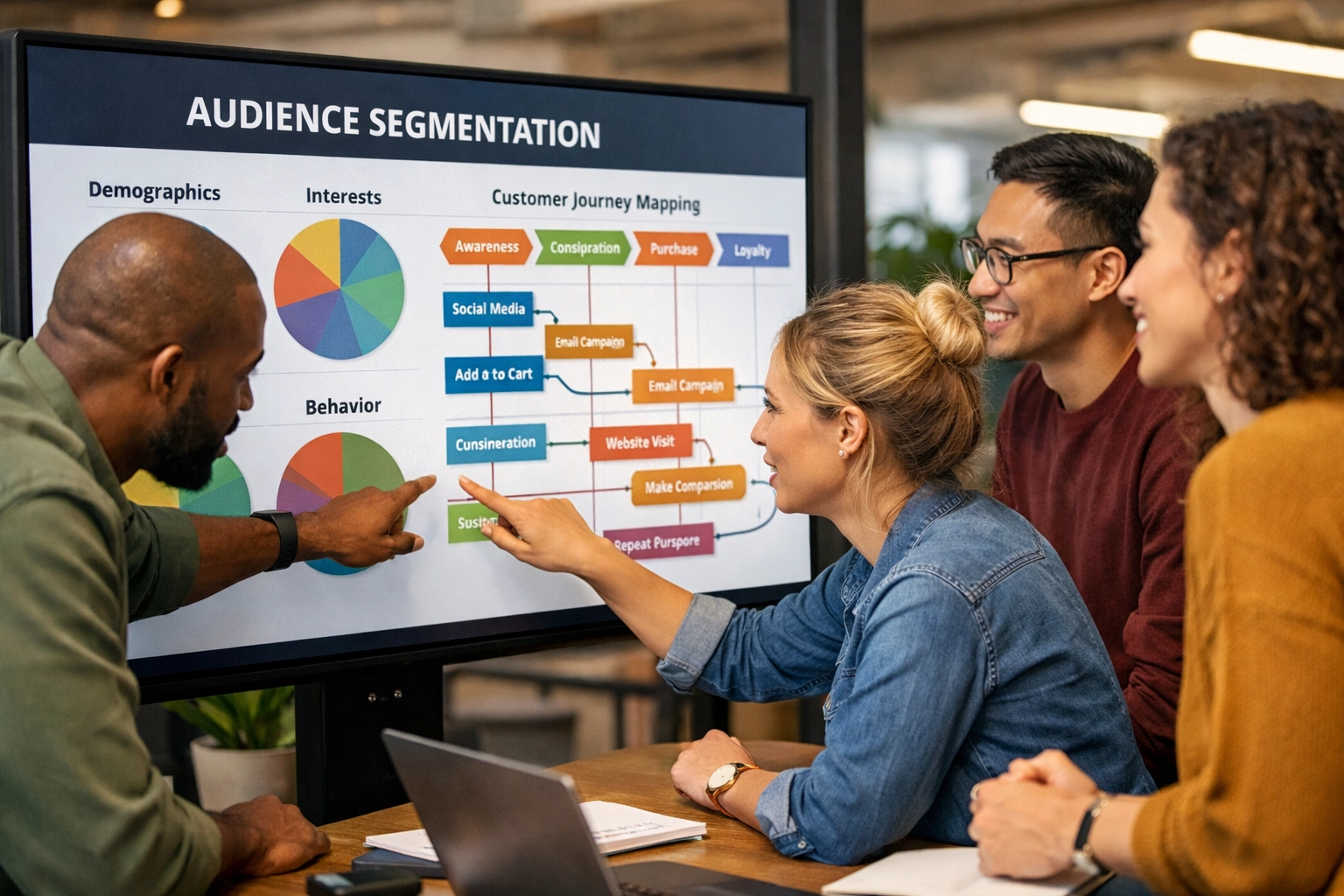
The smart play is aligning your messaging to buyer journey stages:
- Awareness stage: Educational content that introduces your brand and builds trust
- Consideration stage: Deeper content that positions your solution against alternatives
- Decision stage: Conversion-focused messaging that makes saying yes easy
Same audience, different messages, better results.
Action step: Map your existing creative assets to journey stages. Identify gaps. Fill them.

4. Balance Reach with Control
The open exchange gives you scale. Curated supply paths give you quality.
Don't choose one or the other. Use both.
Open exchanges let you reach broad audiences quickly. But they can also expose you to low-quality inventory and brand safety risks. Curated strategies: like private marketplaces and direct deals: bring added control without sacrificing growth.
The best programmatic strategies blend reach and reliability.
Action step: Audit your current supply paths. Are you over-indexed on open exchanges? Add curated inventory to the mix.
5. Reserve Budget for Testing
Here's where most brands get stuck. They find something that works and they milk it until it dies.
Don't be that brand.
Allocate 15-20% of your programmatic budget for testing. New audiences. New creatives. New channels. New messaging angles.
Continuous experimentation prevents campaign fatigue and surfaces optimization opportunities you'd never find otherwise. The brands that scale without stress are the ones that treat testing as a habit, not an afterthought.
Action step: Build testing into your monthly cadence. Document learnings. Apply them.
Measurement That Actually Matters
Let's talk about the M-word. Measurement.
If you're still using last-click attribution, you're flying blind. That model gives all the credit to the final touchpoint and ignores everything that came before. It's like crediting the referee for a championship game.
Modern programmatic measurement requires a fuller picture:
Cross-channel views. Understand how impressions influence outcomes across display, video, mobile, and connected TV. Not just where the click happened.
Incrementality testing. Measure the true impact of your campaigns. Would those conversions have happened anyway? Incrementality testing tells you.
Revenue-connected attribution. Advance toward models that connect programmatic impressions to actual pipeline and revenue. Impressions are nice. Revenue is nicer.
This is where working with the right programmatic advertising agency makes a difference. The tools exist. The frameworks exist. But implementing them requires expertise and discipline.
When to Bring in a Partner
Look: you can run programmatic in-house. Plenty of brands do.
But scaling without stress often means knowing when to get help. A good programmatic advertising agency brings:
- Platform expertise across DSPs and data providers
- Creative resources to keep your campaigns fresh
- Strategic guidance to avoid expensive mistakes
- Bandwidth so your team can focus on what they do best
The key is finding a partner that actually teaches you what they're doing. Not one that hides behind complexity to justify their fees.
We believe in transparency. We believe in education. We believe in letting the people in.
If that sounds like what you're looking for, let's talk.
The Bottom Line
Programmatic advertising in 2026 isn't about spending more. It's about spending smarter.
Build your first-party data foundation. Target accounts that matter. Match messages to moments. Balance reach with control. Test relentlessly. Measure what actually matters.
Do those things and scaling stops feeling like stress. It starts feeling like momentum.
That's the goal. Growth without the chaos. Results without the headaches.
All the people. All the progress.
Let's build something.